


News Center
Quality-oriented-value symbiosis
Industry standards and acceptance specifications for sheet metal processing surface treatment
Release time:
2025-03-07
This article discusses the key technologies of surface treatment of automobile chassis processing, including protective treatment, decorative treatment and functional treatment. Among them, electrophoretic coating is the gold standard for automobile chassis processing, and the film thickness and penetration need to be controlled. Powder spraying is the mainstream choice for chassis processing, and hardness and orange peel control need to be controlled.
In a sheet metal bending factory in Zhuhai, a batch of automobile chassis parts were rusted on a large scale three months after installation due to insufficient thickness of electrophoretic coating, which directly led to recall losses of more than 10 million yuan by the vehicle manufacturer. Such accidents expose the criticality of surface treatment technology - it is not only the outer layer of the product, but also the core line of defense against environmental erosion. This article will deeply analyze the industry standards and acceptance specifications for sheet metal surface treatment to build a solid quality defense line for buyers.
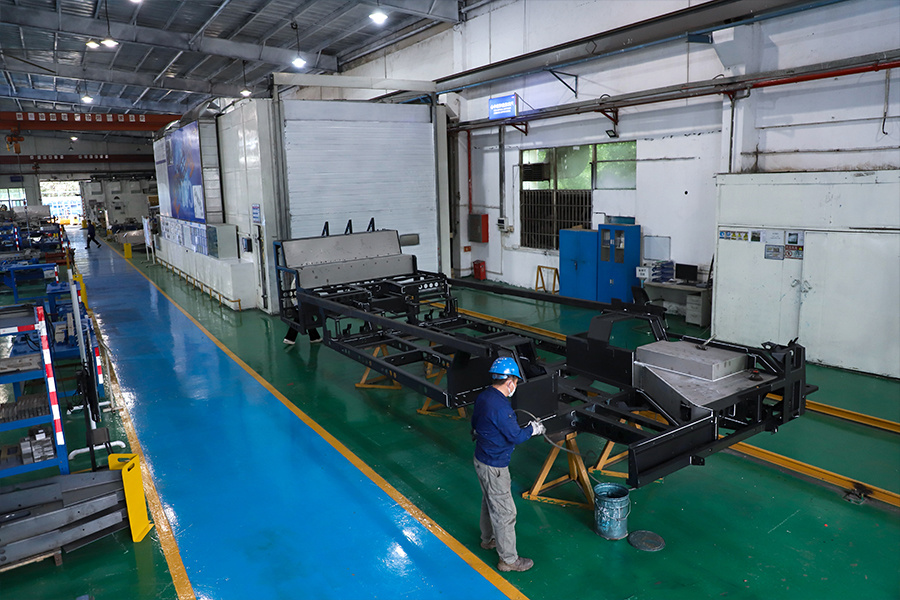
Three core functions of sheet metal surface treatment
1. Protective treatment: the life and death line of automobile chassis processing
The automobile chassis is exposed to humid and salt spray environment for a long time, and the surface treatment must meet the following requirements:
- Corrosion resistance level: According to QC/T 484-1999 standard, the neutral salt spray test of chassis parts is ≥720 hours without red rust;
- Stone impact resistance: Referring to Volkswagen PV3959 standard, the electrophoretic + powder coating must withstand 4bar gravel impact for 15 minutes without falling off.
- Industry pain point: A supplier omitted the phosphatic process, resulting in insufficient bonding between stainless steel sheet metal parts and the electrophoretic layer, causing batch blistering problems.
2. Decorative treatment: the appearance revolution of sheet metal chassis
In the field of high-end electronic equipment, surface treatment directly affects the product's premium ability:
- Gloss control: the 60° gloss of matte powder coating needs to be stable at 10-15GU (according to ISO 2813);
- Color difference control: measured by spectrophotometer, ΔE≤1.5 (no difference in customer's visual observation).
3. Functional treatment: hard-core demand for special scenarios
- Electromagnetic shielding: chemical nickel plating of chassis processing parts needs to achieve 60dB shielding effectiveness (1GHz frequency test);
- High temperature resistance: sheet metal stamping parts of automobile exhaust system need to withstand 650℃ high temperature, and aluminum silicon coating (thickness 50±5μm) is used.

Analysis of the standards of the five major surface treatment processes
1. Electrophoretic coating: the gold standard for automobile chassis processing
- Film thickness control: cathode electrophoretic paint film thickness 18-25μm (CQI-12 special process review requirements);
- Throwing power test: the film thickness inside the hollow cavity needs to reach more than 70% of the outside.
- Case: Chuntian Machinery improves the uniformity of film thickness at the corners of stainless steel sheet metal parts by 40% through precise control of tank liquid temperature (±1℃).
2. Powder coating: the mainstream choice for sheet metal chassis
- Hardness requirement: pencil hardness ≥2H (ASTM D3363);
- Orange peel control: long wave (LW) ≤10, short wave (SW) ≤30 (according to DIN 55610).
3. Chemical nickel plating: functional coating for precision parts
- Coating composition: nickel-phosphorus alloy with phosphorus content of 9-12% (ISO 4527);
- Porosity: immersion in 10% potassium ferrocyanide solution for 2 minutes, pores ≤3/cm².
4. Anodizing: the best choice for aluminum alloy sheet metal riveted parts
- Film thickness: AA-M12C standard requires film thickness ≥12μm;
- Sealing quality: weight loss in acid dye immersion test ≤30mg/dm².
5. Wire drawing: a visual tool for stainless steel sheet metal processing
- Texture consistency: detected by laser confocal microscope, Ra value fluctuation ≤0.2μm;
- Anti-fingerprint treatment: passed the 24-hour artificial sweat test, no visible marks on the surface.

Five acceptance methodologies that procurement must know
1. Appearance inspection: from visual to intelligent detection
- Traditional method: under D65 standard light source, 120° ring inspection is performed 50cm away from the visual object;
- Technology upgrade: Chuntian Machinery introduces AI visual system, which can automatically identify 23 types of defects such as spray particles and color difference.
2. Film thickness detection: accuracy determines life
- Destructive detection: cross-section method + metallographic microscope measurement (error ±1μm);
- Non-destructive testing: electromagnetic induction thickness gauge (ISO 2178) is used, which is suitable for full inspection of automotive chassis processing parts.
3. Adhesion test: Practical application of the hundred-grid knife
- Grid method: According to GB/T 9286 standard, the tape is torn after 11×11 grid cutting, and the shedding area is ≤5%;
- Improvement plan: For the laser welding area of sheet metal, the X-cut method (cross-cut length 10mm) is adopted.
4. Corrosion resistance test: The ultimate test of environmental simulation
- Salt spray test: NSS (neutral), CASS (copper acceleration) different scene selection;
- Cyclic corrosion: New requirements of the automotive industry (such as GM 9540P standard: salt spray + wet heat + dry cycle).
5. Functional verification: Performance testing under extreme conditions
- Wear resistance test: Use 0000# steel wool to rub 100 times with a load of 500g, and the coating has no bottom exposure;
- Chemical resistance: Soak the sheet metal chassis processing parts in a 5% NaCl+3% H2SO4 mixture for 24 hours, and the coating has no wrinkles.
In the field of sheet metal processing, the ability to implement the standard of surface treatment process directly reflects the technical background and management level of the supplier. From the 720-hour salt spray test of automobile chassis processing to the nonlevel brushed texture control of chassis processing parts, every detail is reshaping the quality perception of the manufacturing industry. Choosing a service provider such as Chuntian Machinery that has passed the IATF 16949 certification and has 20 years of technical accumulation not only means obtaining standardized delivery in accordance with ISO 9001, but also represents forward-looking control of supply chain risks. When surface treatment is upgraded from an "auxiliary process" to a "value engine", those practitioners who stick to the standards are defining new heights in the industry.
Key Words
Related Information

Quality-oriented-value symbiosis

Address: No.8, Chuangye East Road, Xiaolin District, Liangang Industrial Zone, Jinwan District, Zhuhai City, Guangdong Province
Links: