


News Center
Quality-oriented-value symbiosis
Customized processing of new energy cabinets
Release time:
2025-04-11
This article discusses the impact of customized processing capabilities of new energy cabinets on the landing efficiency and operational stability of photovoltaic, energy storage, charging piles and other projects. The article analyzes the core value of customized new energy cabinets from three dimensions: technical implementation, application scenarios, and service system.
Driven by the "dual carbon" goal, the new energy industry is undergoing a transformation from equipment standardization to scenario adaptation. As a key carrier for energy storage and conversion, the customized processing capabilities of new energy cabinets directly affect the implementation efficiency and operational stability of photovoltaic, energy storage, charging pile and other projects. This article will analyze the core value of customized new energy cabinets from three dimensions: technical implementation, application scenarios, and service systems.

Customization on demand: precise transformation from drawings to physical objects
1. Full-dimensional demand response
We use three-dimensional modeling technology to calibrate the cabinet size at the millimeter level. For photovoltaic confluence scenarios, 12-24 input terminal layouts of different specifications can be customized; in energy storage projects, modular design is used to achieve partition isolation between battery clusters and BMS systems, and the cabinet depth can be flexibly adjusted from 600-1200mm according to the size of the battery pack. All design schemes provide CAD drawings and 3D renderings to ensure that customers can intuitively confirm the details.
2. Environmental adaptability design
In response to the problem of salt spray corrosion in coastal areas, the cabinet body uses 2mm thick 316L stainless steel plate, the surface is treated with fluorocarbon spraying, and the salt spray test time is more than 1000 hours; in the northwest wind and sand environment, it is equipped with a three-level dust filter and air pressure balance valve, and the protection level reaches IP66. For the severely cold areas in the north, an electric heating defrost module can be optionally configured to ensure the normal startup of the equipment in a -40℃ environment.
Process guarantee: visible quality control
1. Full-process manufacturing system
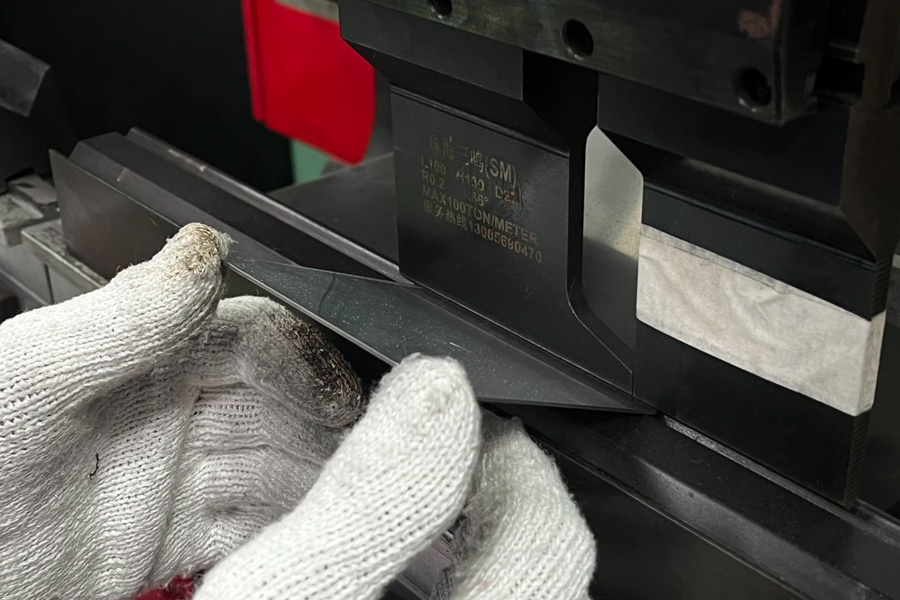
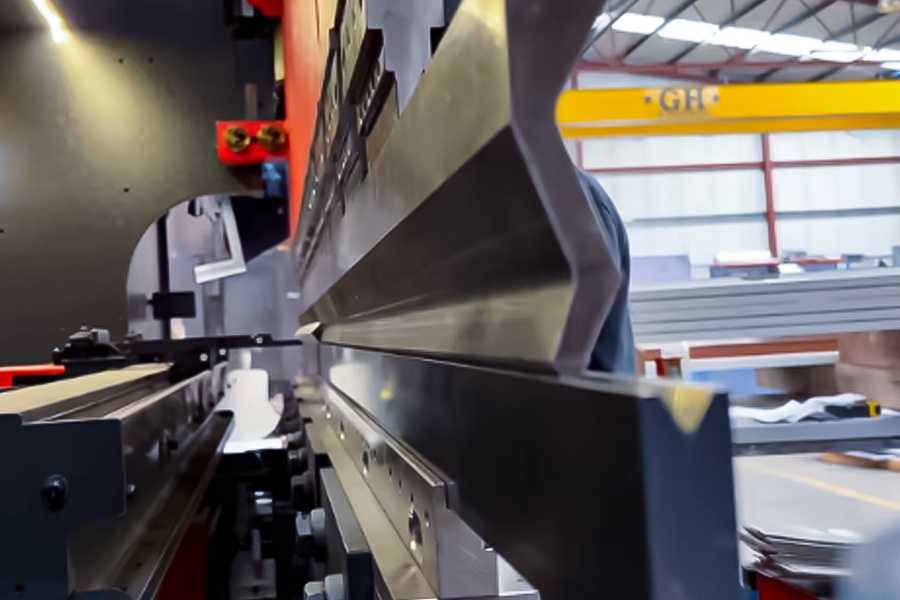
The production base is equipped with CNC bending machines, laser cutting machines, automatic welding robots and other equipment, and the verticality error of the cabinet body is controlled within 0.5mm/m. The internal circuit adopts the wire trough separation process, and the strong and weak current spacing is maintained at more than 50mm. Surge protection devices and temperature monitoring modules are standard. Each cabinet body must undergo a 48-hour power-on aging test before leaving the factory, simulating a 25℃-60℃ temperature cycle environment to ensure stable electrical performance.
2. Material traceability management
The main materials are selected from high-quality suppliers. The cold-rolled steel plates meet the GB/T 708 standard, and the surface galvanized layer thickness is ≥8μm; the insulation parts are made of Bayer PC/ABS alloy material, and the flame retardant grade reaches UL94-V0. All raw materials are accompanied by test reports, support code scanning and traceability, and control product quality from the source.

Scenario-based solutions: covering three core areas
1. Photovoltaic energy storage integration
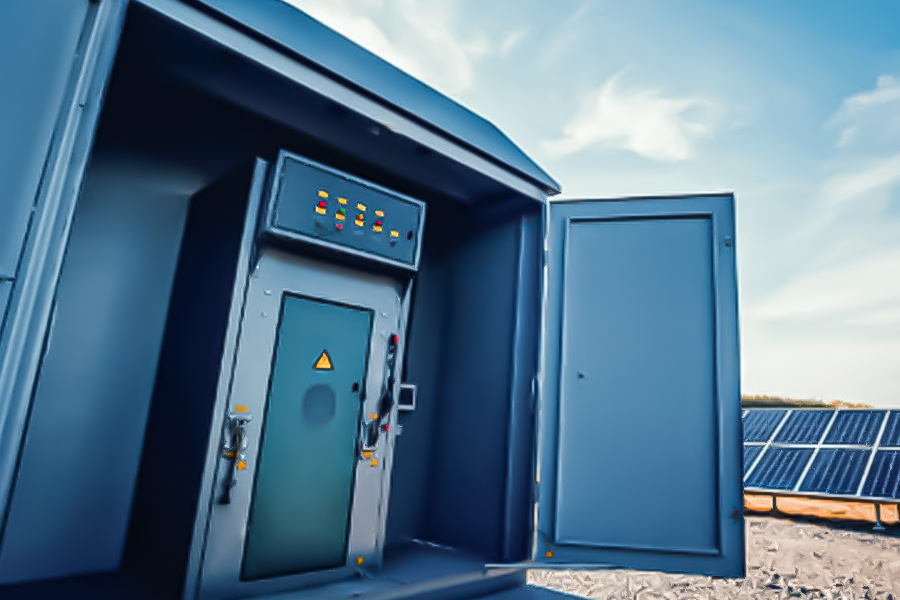
The integrated cabinet customized for industrial and commercial distributed photovoltaic projects integrates MPPT controllers, lithium battery packs and grid-connected inverters. The cabinet reserves 50% expansion space to support later capacity expansion and transformation. In a logistics park project, by customizing a 1.2-meter-wide wall-mounted cabinet, 30% of the floor space was effectively saved, and the project construction period was shortened by 20%.
2. Charging pile matching
In response to the needs of community fast charging stations, charging pile cabinets with different power ranges of 7kW-240kW are developed, with leakage protection and over-temperature alarm functions as standard. In a new energy vehicle demonstration park project, L-shaped corner cabinets were customized according to the parking space layout, which solved the problem of space waste in traditional in-line cabinets and increased the single-station equipment capacity by 15%.
3. Microgrid system
The outdoor integrated cabinet designed for off-grid wind-solar storage projects integrates wind-solar hybrid controllers, diesel generator switching devices and energy storage management systems. The cabinet adopts a double-layer insulation structure, and the internal temperature rise is controlled within 15℃. In a pastoral project in Qinghai, it can achieve stable operation in a -25℃ environment for 30 consecutive days.
Key Words
Related Information
Quality-oriented-value symbiosis

Address: No.8, Chuangye East Road, Xiaolin District, Liangang Industrial Zone, Jinwan District, Zhuhai City, Guangdong Province
Links: