


News Center
Quality-oriented-value symbiosis
Sheet metal processing technology
Release time:
2024-04-11
Sheet metal processing is called sheet metal processing. Specifically, for example, the use of plates to make chimneys, iron barrels, oil tanks, ventilation pipes, elbow sizes, round places, funnel shapes, etc., the main processes are cutting, bending, bending, welding, riveting, etc.,

Every industry has its professional terms, sheet metal processing industry is no exception. The following 25 are common.
(1) Pressure riveting: refers to the process of using a press or hydraulic press to firmly press riveting nuts, riveting screws or riveting nut columns and other fasteners on the workpiece.
(2) Rising riveting: refers to the process of sinking the workpiece first, and then using a punch or hydraulic press to firmly press the rising riveting nut on the workpiece.
(3) Pulling Nut: refers to the use of similar riveting process. The process of securely attaching a connector, such as a POP, to a workpiece with a broach gun.
(4) Riveting by Pulling: refers to the process of closely connecting two or more workpieces with a riveting gun as a tool.
(5) Riveting: The process of connecting two or more workpieces face to face with rivets, if the countersunk riveting, the workpiece needs to be countersunk first.
(6) refers to the process of cutting the workpiece Angle using a die on the punch or hydraulic press.
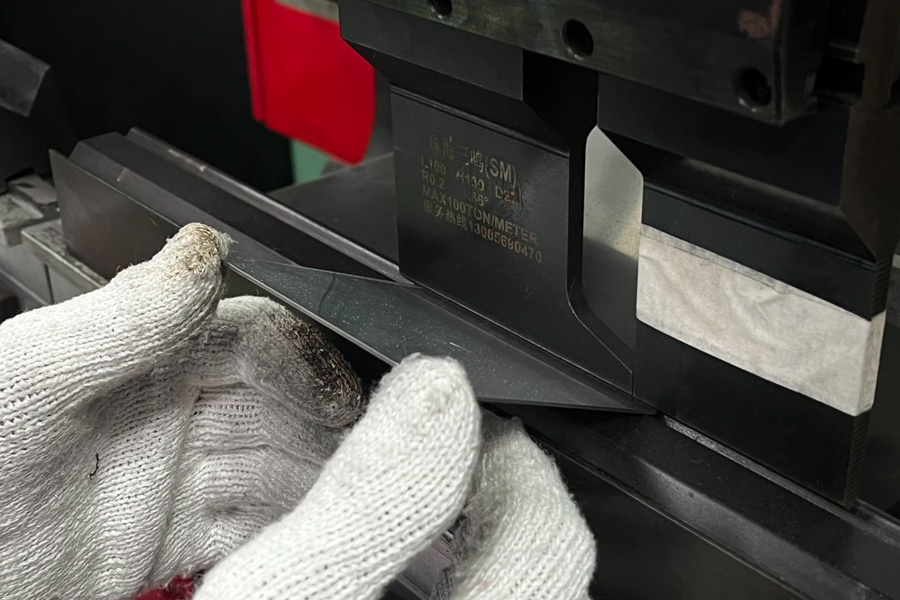
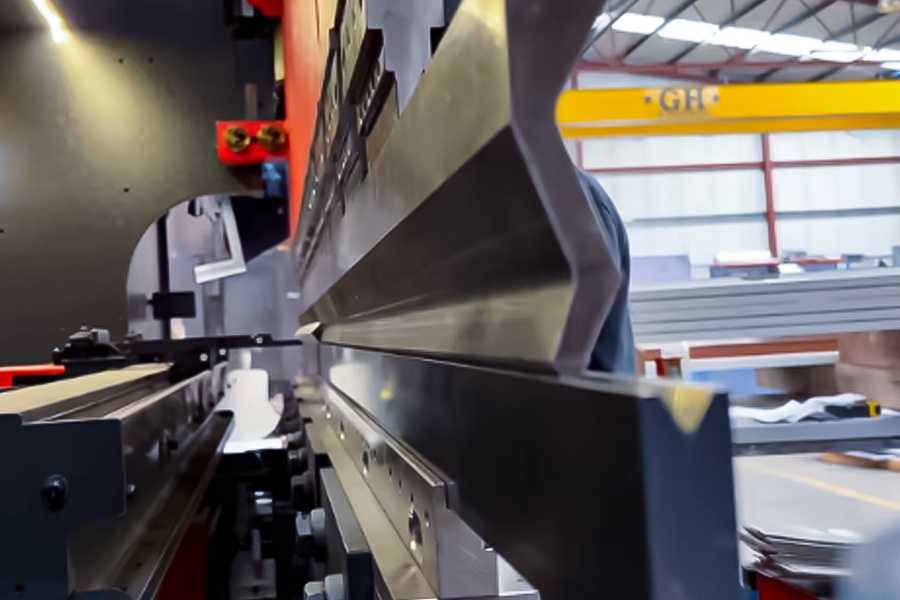
(7) Bending: refers to the process of forming the workpiece by the bending machine.
(8) Forming: refers to the process of using a mold to deform the workpiece on an ordinary punching machine or other equipment.
(9) Cutting material: refers to the process of obtaining rectangular workpieces through the plate shearing machine.
(10) blanking: refers to the process of cutting the workpiece by LASER or CNC punching machine.
(11)cutting material: refers to the process of using a mold to obtain the shape of the product on an ordinary punching machine or other equipment.
(12) Punching: refers to the process of machining holes by ordinary punching machines and molds.
(13) Punching convex: refers to the process of forming a convex shape of the workpiece with a die in the punching press or hydraulic press.
(14) Punching tear: also called "punching bridge", refers to the process of forming the workpiece like a bridge with a die in the punching press or hydraulic press.
(15) Hole extraction: also called "flanging", refers to the process of using a mold to form a round hole edge on the workpiece in an ordinary punch or other equipment. Process.
(17) Leveling: refers to the process of uneven workpiece processing before and after the use of other equipment to smooth the workpiece.
(18) Back teeth: refers to the process of repairing the second screw of the workpiece that has been tapped in advance.
(19) Drilling: refers to the process of drilling the workpiece using the drill on the drilling machine or milling machine.
(20) chamfering: refers to the process of processing the sharp corners of the workpiece using molds, files, grinding machines, etc.
(22) Countersunk hole: refers to the process of machining taper holes on the workpiece in order to cooperate with a type of connection similar to countersunk screws.
(23) patting: refers to the process of transitioning to a flat workpiece with a certain shape.
(24) Punching mesh: refers to the mesh holes that are rushed out of the workpiece with the mold on the ordinary punching machine or CNC punching machine.
(25) Reaming: refers to the process of machining small holes on the workpiece into large holes with a drill or a milling cutter
Key Words
Related Information

Quality-oriented-value symbiosis

Address: No.8, Chuangye East Road, Xiaolin District, Liangang Industrial Zone, Jinwan District, Zhuhai City, Guangdong Province
Links: