


News Center
Quality-oriented-value symbiosis
Precision Sheet Metal Bending: Techniques & Industry Applications
Release time:
2025-04-28
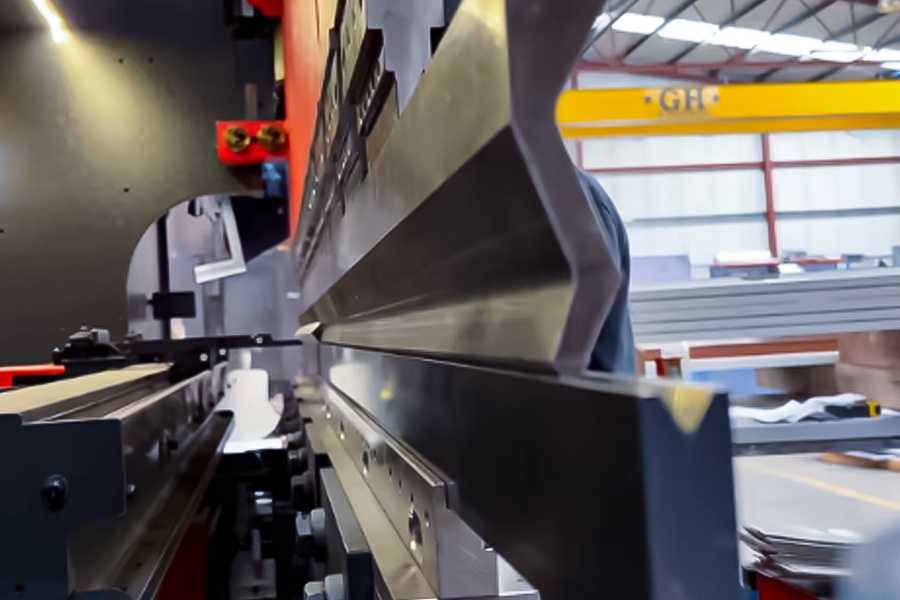
The bending process is the shaping magic of metal tailors. The pressure applied by the mold causes the flat material to undergo plastic deformation to form parts with specific angles and shapes. Its core advantage is that it can transform flat sheets into three-dimensional structures, and is widely used in the manufacture of precision equipment housings and bracket components.
In the field of sheet metal processing, the bending process can be called "the shaping magic of metal tailors". The pressure applied by the mold causes the flat material to undergo plastic deformation to form parts with specific angles and shapes. The core advantage of this process is that it can transform flat plates into three-dimensional structures, and is widely used in the manufacture of various precision equipment housings and bracket components. Taking the inkjet printer chassis as an example, the right-angle bending, arc transition and other details of its housing directly affect the sealing and appearance texture of the equipment, and the control error of the bending accuracy must be strictly controlled within 0.1mm to ensure the accuracy of subsequent assembly.
Process principle and key equipment
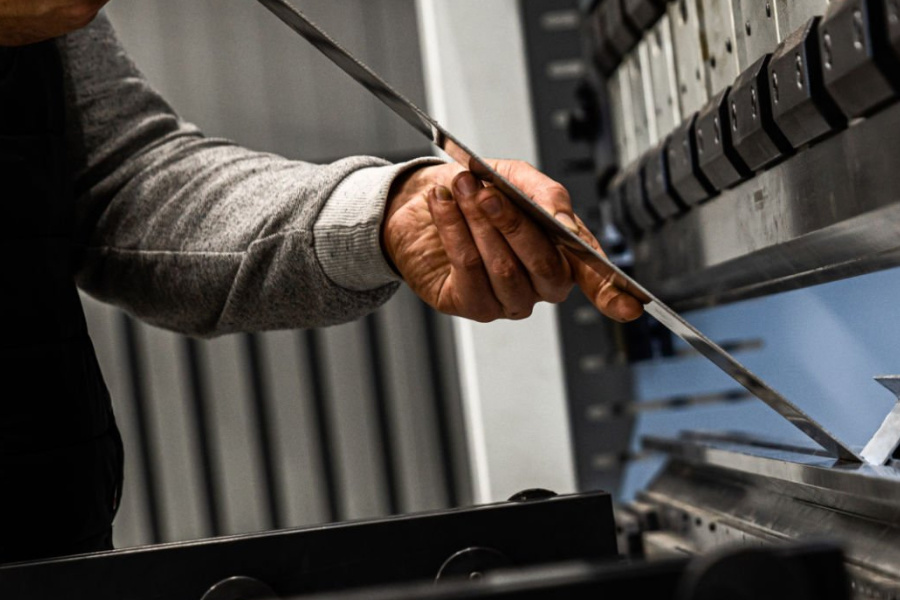
The bending process is based on the plastic deformation characteristics of the material. The upper and lower dies of the bending machine are used to apply progressive pressure to the sheet. Commonly used equipment includes CNC bending machines, manual bending machines, etc. Among them, CNC equipment can realize the automated processing of complex bending paths with the help of servo motor drive and CAD model import functions. When processing stage lighting accessories, for the multi-angle bending requirements of aluminum alloy brackets, it is necessary to simulate the bending process in advance through 3D modeling software, calculate the material rebound amount and adjust the mold parameters to ensure that the final bracket has sufficient structural strength and meets the installation accuracy requirements of lighting equipment.
Material adaptability and process parameters
Sheet metal materials of different materials show different processing characteristics during the bending process. For example, stainless steel sheets have high yield strength, so a larger bending force and wear-resistant molds are required; while aluminum alloy sheets have good plasticity, but are prone to surface scratches, and the mold contact surface needs to be covered with an anti-slip coating. In the shell processing of the liquid agitator, for the bending of 304 stainless steel, special attention should be paid to the ratio of the bending radius to the thickness of the sheet - usually the bending radius should be no less than 1.5 times the thickness of the sheet to avoid cracks on the inner wall, and the deformation deviation caused by material heating can be reduced by adjusting the bending speed (it is recommended to be controlled at 5mm/s).
In-depth application of bending technology in segmented products
1. Inkjet printer chassis: from structural reinforcement to appearance optimization
As a high-precision electronic device, the bending process of the inkjet printer chassis must take into account both functionality and aesthetics. In terms of structural design, the bending and flanging structure of the chassis side panel not only enhances the overall rigidity, but also provides an installation positioning reference for the internal circuit board; and the arc bending treatment of the front and rear door panels not only avoids the safety hazards caused by sharp corners, but also enhances the industrial design sense of the equipment. In actual processing, through multiple bending and forming processes (single bending angle does not exceed 90°), the cold work hardening effect of the sheet can be effectively controlled to prevent material embrittlement caused by excessive bending.
2. Stage lighting accessories: solutions for diversified bending needs
There are many types of accessories for stage lighting equipment, including light stands, reflector brackets, etc., and their bending processes show obvious diversified characteristics. Taking the parabolic reflector bracket as an example, the "segmented bending + shaping" process is required: first, the multi-angle bending of the straight segment is completed by the CNC bending machine to form a basic frame structure, and then the arc transition area is reshaped using a special shaping mold to ensure that the flatness error of the reflector mounting surface is less than 0.2mm. This combined process not only meets the processing requirements of complex geometric shapes, but also ensures the consistency of mass production.
3. Liquid agitator: double guarantee of corrosion resistance and sealing
As a chemical equipment, the bending processing of the shell and base of the liquid agitator must take into account both corrosion resistance and structural sealing. When processing polypropylene (PP) sheets, due to the low melting point of the material (about 160℃), a normal temperature bending process is required, and a reinforcing rib structure is designed at the bending gap to enhance the anti-deformation ability. For the flange bending of the agitator base, the relative accuracy of the bending angle and the bolt hole position must be specially controlled. By setting the positioning pin hole on the mold, the flange flatness error is controlled within 0.15mm to ensure the reliability of the sealing connection between the flange and the tank body during subsequent welding.
Quality control and common problem solving of bending process
Core quality indicators
● Angle accuracy: An angle ruler or laser goniometer is used for detection, and the allowable deviation is ±0.5°.
● Straightness: Measured by a straightness detector, the error within each meter of length does not exceed 0.3mm.
● Surface quality: Visually inspect the bending area, and cracks, scratches and obvious mold indentations are not allowed.
Value empowerment and technological evolution of bending process
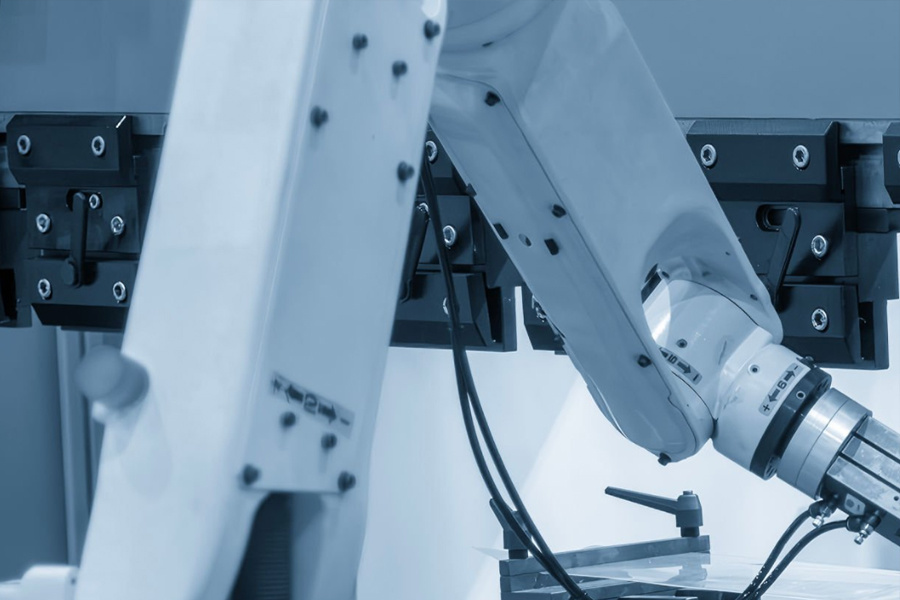
As one of the core processes of sheet metal processing, bending technology is developing in the direction of "high precision, automation and intelligence". Through deep integration with digital modeling and robot bending units, closed-loop control of the entire process from drawing design to bending and forming can be achieved in the future. For segmented products such as inkjet printer chassis, stage lighting accessories, and liquid medicine agitators, the bending process is not only a means of forming parts, but also a key link to improve product reliability and added value. Enterprises need to continuously optimize mold design and strengthen process parameter management to meet the diverse needs of customers while continuously consolidating their own technological competitiveness.
FAQ
Q1: How to choose molds when bending plates of different thicknesses?
A1: Usually follow the principle of "lower mold opening width = 6-8 times the thickness of the plate". For example, when processing 2mm thick steel plates, choose a lower mold with an opening of 12-16mm to ensure that the bending force is evenly distributed.
Q2: How to determine whether there is internal stress in the plate after bending?
A2: You can observe whether there is rebound deformation through natural aging treatment (placed for 24 hours), or use a stress detector to measure the surface residual stress. When it exceeds 10% of the material yield strength, stress relief annealing is required.
Q3: Can non-metallic plates such as acrylic be bent?
A3: Yes, but it requires a heating bending process (the heating temperature is controlled near the softening point of the material, such as 140-160℃ for acrylic), and a dedicated non-metallic mold is used to avoid surface scratches.
Key Words
Related Information
Quality-oriented-value symbiosis

Address: No.8, Chuangye East Road, Xiaolin District, Liangang Industrial Zone, Jinwan District, Zhuhai City, Guangdong Province
Links: