


News Center
Quality-oriented-value symbiosis
Sheet Metal Stamping: Efficient Forming & Precision Manufacturing
Release time:
2025-04-29
The stamping process is efficient and accurate in the field of sheet metal processing and is often used to manufacture industrial products with high consistency requirements. The material adaptability of the stamping process varies greatly, and the stamping speed and die gap need to be adjusted according to the material characteristics.
In the field of sheet metal processing, stamping technology has become an important means of shaping complex metal components due to its high efficiency and precision. It applies external force to the sheet through a press and a die to cause plastic deformation or separation, thereby obtaining parts of the required shape and size. This process has significant advantages in mass production, especially for the manufacture of industrial products with extremely high consistency requirements.
Core elements and technical principles of stamping technology
1. Collaborative operation of stamping equipment and die
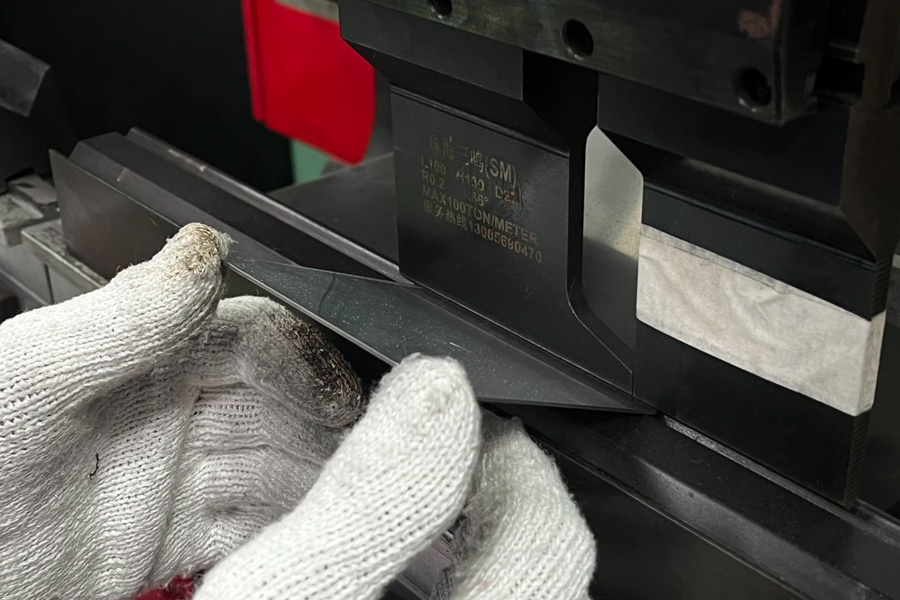
Stamping equipment mainly includes mechanical presses, hydraulic presses, etc. Among them, mechanical presses are widely used in the production of medium and small parts due to their high speed and stability. The die is the "soul" of the stamping process, which is divided into single-process die, compound die and progressive die. Taking the heat dissipation hole processing of the inkjet printer chassis as an example, the progressive die can complete multiple processes such as punching and trimming in one feeding process, greatly improving production efficiency. The accuracy of the die directly affects the product quality, and its manufacturing tolerance usually needs to be controlled within ±0.02mm.
2. Material adaptability of stamping process
Different sheet metal materials have obvious differences in performance during the stamping process. Stainless steel sheets have high strength, but the mold is easy to wear during stamping; aluminum alloy sheets are light and have good plasticity, but they are prone to wrinkling and cracking. In the production of stage lighting accessories, when using aluminum alloy stamping lamp shells, the stamping speed and mold gap need to be adjusted according to the material properties. Generally speaking, the stamping speed is controlled at 10-20 times/minute, and the mold gap is set to 1.1-1.2 times the thickness of the sheet to ensure the molding quality.

Innovative application of stamping technology in segmented products
1. Inkjet printer chassis: structural optimization and functional integration
The stamping process of the inkjet printer chassis focuses on structural optimization and functional integration. The buckles, mounting holes and other structures on the chassis shell are formed in one step by stamping, reducing the subsequent assembly process. When designing the mold, the finite element analysis software is used to simulate the stamping process, optimize the stress distribution, and prevent deformation and cracks. At the same time, the punched rib structure enhances the rigidity and vibration resistance of the chassis, providing reliable protection for the internal precision electronic components.
2. Stage lighting accessories: diversified shapes and mass production
The diverse shapes of stage lighting accessories put forward higher requirements for stamping technology. For example, complex-shaped reflective cups are gradually formed through multiple stamping processes. First, the sheet is stretched into a cup shape using a stretching die, and then the shape is accurately corrected by a shaping die. In mass production, the use of an automated stamping production line, combined with robot loading and unloading, not only improves production efficiency, but also ensures product consistency. Hundreds of reflective cups can be produced per hour, with a yield rate of more than 98%.
3. Liquid agitator: corrosion resistance and high precision requirements
The stamping parts of the liquid agitator must have good corrosion resistance and high precision. Its stirring blades are stamped from stainless steel, and the sheet is surface treated before stamping to improve corrosion resistance. During the stamping process, the dimensional accuracy is strictly controlled, and the flatness error of the blade does not exceed 0.1mm to ensure the stirring effect. At the same time, deburring and polishing after stamping are also crucial to avoid burrs affecting the quality of the liquid and the service life of the equipment.

Quality control of stamping process
The quality inspection of stamping parts covers dimensional accuracy, surface quality and mechanical properties. The dimensions are detected by a three-coordinate measuring instrument to ensure that the error is within the specified range; the surface is checked visually and with a magnifying glass, and cracks, scratches and other defects are not allowed; the key parts are hardness tested to ensure that the mechanical properties meet the standards.
Development trend and industry value of stamping process
Sheet metal stamping process occupies an important position in modern manufacturing industry. With the development of automation and intelligent technology, its production efficiency and processing accuracy will be further improved. In the manufacturing of products such as inkjet printer chassis, stage lighting accessories, and liquid medicine agitators, the stamping process not only achieves efficient production, but also guarantees the quality and performance of the products. In the future, the stamping process will continue to develop in the direction of high precision, greening and intelligence, bringing more innovation possibilities to the manufacturing industry.
FAQ
Q1: What factors affect the service life of stamping dies?
A: The service life of the die is affected by factors such as material quality, processing accuracy, frequency of use and maintenance. High-quality die steel, precise processing technology, reasonable use and regular maintenance can effectively extend the life of the die.
Q2: How to reduce the noise during stamping?
A: The noise can be reduced by optimizing stamping process parameters, using shock-absorbing equipment, and silencing the mold. For example, a buffer device can be used to reduce the impact force, and a shock-absorbing pad can be installed on the base of the press.
Q3: What is the main reason for burrs on stamped parts?
A: The main reasons include excessive mold gap, edge wear, and excessive stamping speed. This can be solved by adjusting the mold gap, grinding the edge, and controlling the stamping speed.
Key Words
Related Information

Quality-oriented-value symbiosis

Address: No.8, Chuangye East Road, Xiaolin District, Liangang Industrial Zone, Jinwan District, Zhuhai City, Guangdong Province
Links: