


News Center
Quality-oriented-value symbiosis
Analysis of the core difficulties and breakthrough paths of tolerance control of high-precision sheet metal parts
Release time:
2025-06-05
In the precision manufacturing industry, tolerance manipulation is a key technology to ensure product reliability. At present, the dynamic damage of material properties, the difference between elastic molds and compressive strength, and the slight differences in smelting process and cold rolling pass distribution will affect the accuracy. The cumulative error of multiple processes is the main factor leading to precision shortcomings, which needs to be solved through the optimization of the process chain.
In the precision manufacturing industry, the tolerance control of sheet metal processing is like a precise chain. The looseness of any link will lead to the failure of the overall performance. Especially in the industries of aerospace engineering and medical machinery that are very strict on precision, tolerance control has become a key technical obstacle to ensuring product reliability. At present, this field has encountered three core technical bottlenecks, which are closely related and constitute complex precision control difficulties.
Dynamic damage of material properties: nonlinear detection of elastic behavior
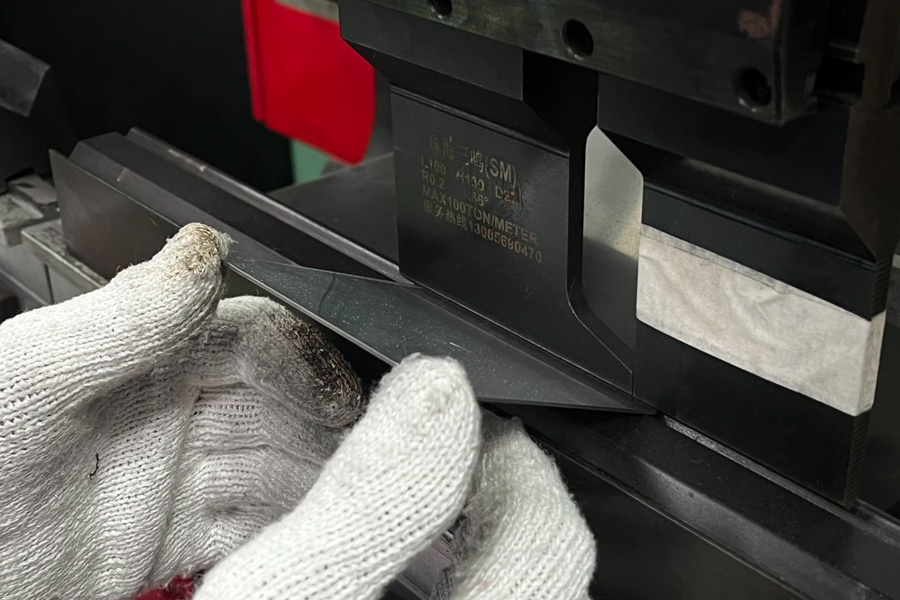
Metal materials show obvious nonlinear mechanical behavior in plastic processing, among which the rebound effect is the first control problem. When the plate is subjected to external loads in the forming links such as stamping and bending, elastic deformation and plastic deformation occur simultaneously inside it. The elastic deformation part recovers immediately after unloading, and the shape change produces permanent bending. However, the elastic mold and compressive strength of different metal materials are actually different, which makes it impossible to accurately predict the bending repair level of the system under the same processing conditions. For example, under the same bending field, austenitic stainless steel and aluminum alloy will show very different changes in elastic force because the former has a higher elastic mold.
What is more complicated is that due to the slight differences in production links such as smelting process indicators and cold rolling pass distribution, different batches of the same material may cause fluctuations in the mechanical properties of the material. Such fluctuations cannot be effectively identified in the previous empirical processing mode, and are generally reflected in the discreteness of the workpiece model under the same process indicators. Microstructural characteristics such as grain orientation and inclusion distribution inside the material will also cause hidden damage to the forming accuracy through various behaviors, causing the traditional prediction model based on macroscopic mechanical parameter tolerance to encounter accuracy shortcomings.
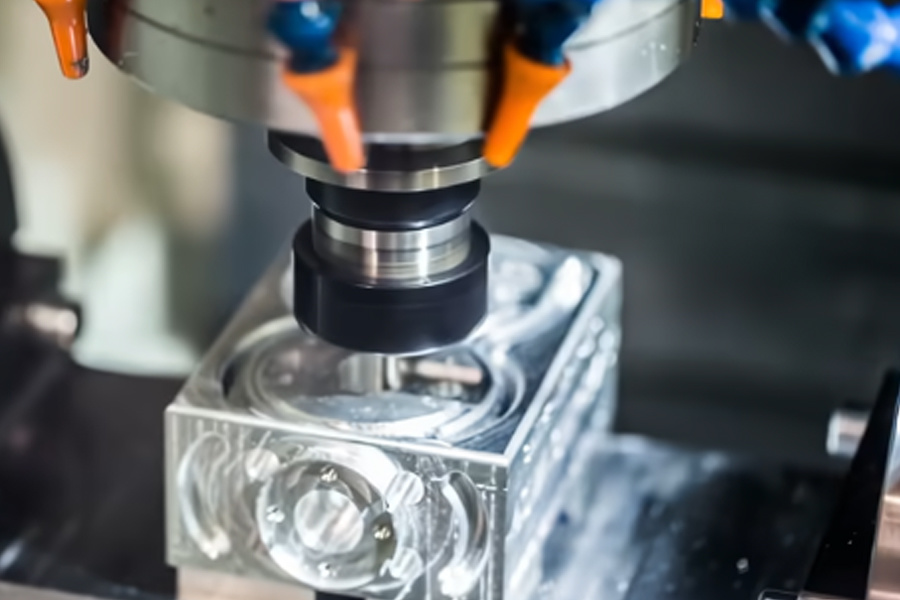
Multi-process cumulative error: Error transmission mechanism in the processing process
Today's sheet metal processing generally requires multiple processes such as cutting, punching, bending, and welding, resulting in a complicated process chain. Each process may become the source of error: in the cutting process, the thermal stress generated by hot cutting may cause partial bending of the plate; in the punching process, slight damage to the mold will cause hole position error; in the bending process, the dynamic stiffness change of the punching machine will seriously affect the bending angle accuracy; in the welding process, some thermal deformation caused by high temperature is an uncontrollable error source.
This type of single process error does not exist independently, but is transmitted and interconnected between processes using carriers such as workpiece positioning reference and clamping methods. For example, the edge error of the cutting process will directly affect the accuracy level of the post-bending process, resulting in errors in the bending angle standard; the error of the punching part will cause the forced positioning of the components during the welding process, resulting in welding stress and deformation. The cumulative effect of this type of error has significant nonlinear characteristics. With the increase in the number of processes, the probability of errors exceeding the tolerance band increases exponentially, and the traditional single process precision control mode is difficult to cope with the cumulative errors of the complex process chain.
Hidden hazards of environment and stress: long-term impact of time-varying factors
In the production and use of high-precision sheet metal, the changing laws of environmental factors and internal stress constitute another important test. Uneven light distribution in the temperature field will cause thermal expansion and contraction of the material, which is particularly obvious in various thick-walled sheet metals. When the working temperature fluctuates, the structural dimensions of the workpiece can be reversibly bent with the change of air temperature, and the difference in linear expansion coefficients of different materials further exacerbates the complexity of this type of bending. In the precision assembly scenario, dimensional fluctuations caused by temperature may cause the fit tolerance to fail, endangering the completion of product characteristics.
On the other hand, the internal residual stress generated during processing will gradually release over time, resulting in the so-called structural residual stress "aging deformation". Whether it is the shape change during the forming process or the thermal stress during the welding process, a complex stress field should be formed inside the workpiece. At room temperature, this type of residual stress will be slowly released through microscopic mechanisms such as dislocation movement and crystallization movement, causing the workpiece to bend slightly. This type of bending is long-term accumulation and cannot be captured immediately based on real-time monitoring methods. It is usually displayed in the storage, transportation or use of the product after delivery, posing a potential threat to the long-term dimensional stability of the product.
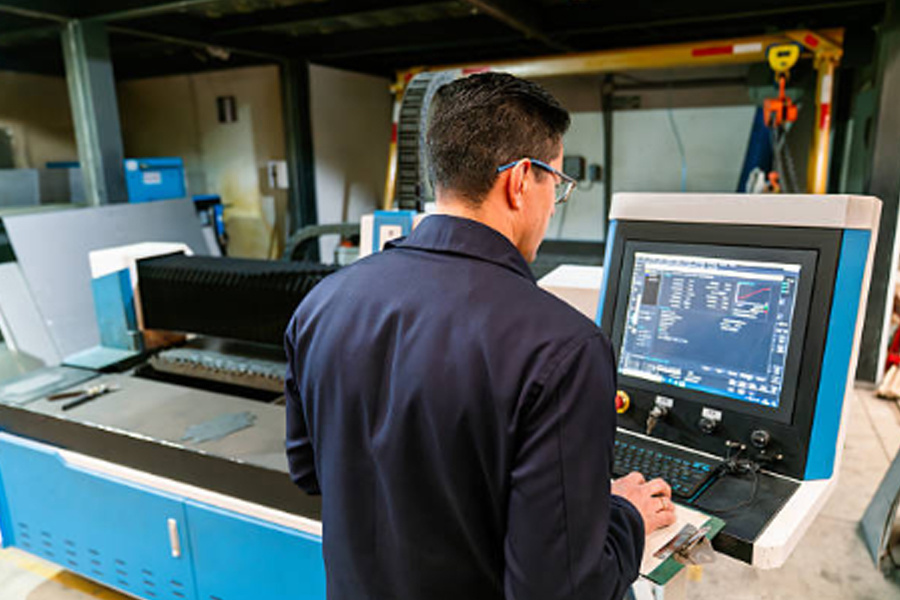
Solution suggestion: Build a dynamic closed-loop control system
In order to cope with the above complex tolerance control problems, excellent manufacturing companies have built a full-process precision control system from three dimensions: materials, processes, and systems. In terms of materials, the stress elimination and performance homogenization of the plate are processed based on pretreatment technology, such as selecting processes such as heat treatment and vibration aging to change the microstructure of the material, and reduce the impact of performance differences between batches on specification accuracy. At the process level, online measurement and real-time compensation technology is introduced. Based on high-precision sensors, key dimensional data in the processing process is collected in real time. The optimization algorithm is integrated to dynamically manage the process indicators, and dynamic errors such as rebound and thermal deformation are compensated in real time.
Most importantly, the application of digital twin technology has brought disruptive improvements to tolerance control. By establishing a virtual processing model that includes material properties, equipment behavior and process indicators, and simulating the entire processing process in the digital space, the generation and accumulation of errors in each process can be accurately predicted. Based on the process improvement of the digital twin model, tolerance fluctuation risk assessment and process indicator pre-adjustment can be completed before physical processing, forming a "real-time monitoring-intelligent analysis-precise adjustment" closed-loop control system. This technical path that deeply integrates the physical processing process with the digital space transforms the tolerance control of sheet metal processing from past experience to data-driven, effectively improving the accuracy assurance level under complex working conditions.
Generally speaking, the tolerance control of high-precision sheet metal is a systematic project that integrates materials science, mechanical engineering and measurement and control technology. Only by improving the technical limitations of a single link and establishing a real-time control system covering the entire life cycle can we achieve strict control of tolerance variations in the μm precision test field and lay a solid technical foundation for the development of the high-end equipment manufacturing industry.
Key Words
Related Information

Quality-oriented-value symbiosis

Address: No.8, Chuangye East Road, Xiaolin District, Liangang Industrial Zone, Jinwan District, Zhuhai City, Guangdong Province
Links: