


News Center
Quality-oriented-value symbiosis
Essential equipment for sheet metal processing: from shearing machines to bending machines
Release time:
2024-10-23
In modern manufacturing, sheet metal processing plays a vital role. Whether it is automobile manufacturing, electronic equipment housing production, or mechanical parts processing, sheet metal processing technology is indispensable. To carry out efficient and accurate sheet metal processing, a series of necessary equipment is indispensable, among which shearing machines and bending machines are the key.
In modern manufacturing, sheet metal processing plays a vital role. Whether it is automobile manufacturing, electronic equipment housing production, or mechanical parts processing, sheet metal processing technology is indispensable. To carry out efficient and accurate sheet metal processing, a series of necessary equipment is indispensable, among which shearing machines and bending machines are the key.
Shearing machines are commonly used equipment in the first process of sheet metal processing. Its main function is to cut large pieces of metal sheets according to the required size.
The working principle of the shearing machine is to apply shearing force to the sheet through the relative movement of the upper and lower blades, thereby cutting the sheet. Its advantage is that it can quickly and accurately cut out sheets of various sizes, providing standardized raw materials for subsequent processing procedures.

When choosing a shearing machine, multiple factors need to be considered:
1. The thickness and width range of the sheet. Different models of shearing machines can handle different sheet sizes, and should be selected according to actual production needs. The second is shearing accuracy. High-precision shearing machines can ensure that the dimensional error of the sheet is controlled within a very small range and improve product quality.
2. The stability and reliability of the equipment are also important considerations. A shearing machine with stable performance can reduce the frequency of failures and improve production efficiency. (In the automobile manufacturing industry, a large number of body panels need to be accurately cut through the shearing machine. Only by ensuring the dimensional accuracy of the plate can the quality and stability of the body be ensured in subsequent welding, assembly and other processes.)
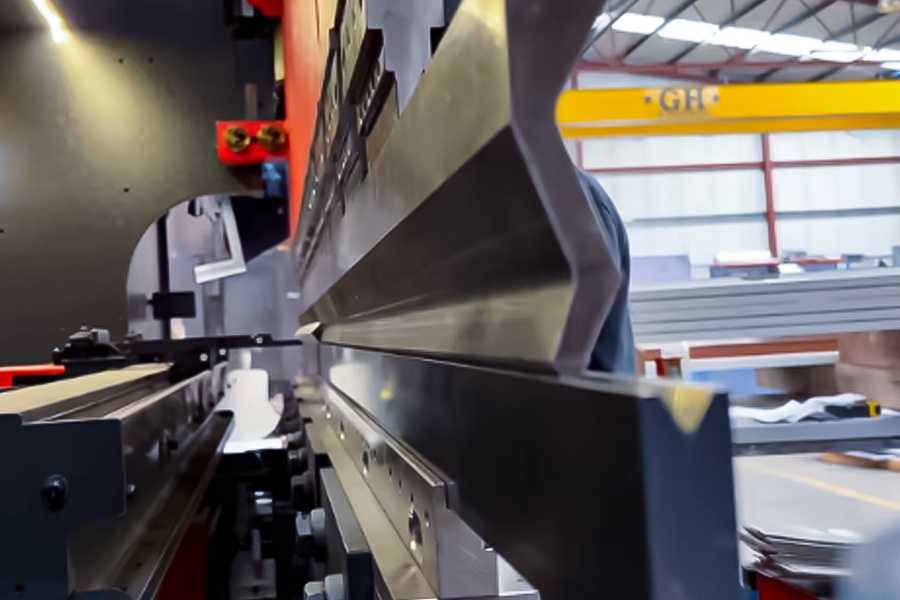
The bending machine is an important equipment used in sheet metal processing to bend the plate into various angles and shapes.
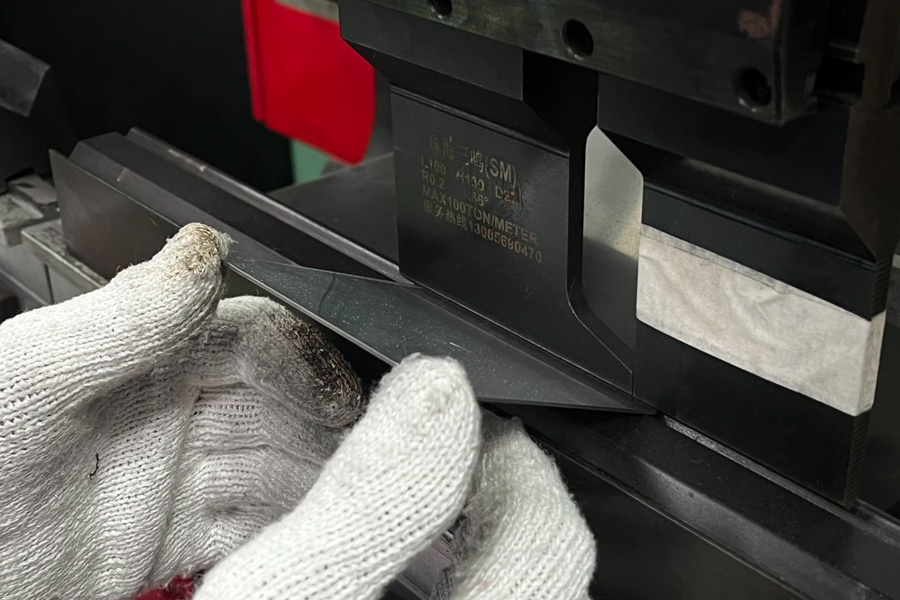
The working principle of the bending machine is to apply pressure to the plate through the mold to make the plate plastically deform, so as to achieve the required bending angle. Its advantage is that it can achieve high-precision bending processing, and the bending angle and shape can be adjusted according to different product requirements.
The operating specifications of the bending machine are crucial to ensure operational safety and processing quality:
1. Before operating the bending machine, the operator must undergo professional training and be familiar with the performance, structure and operation methods of the equipment. Before starting the machine, check whether all parts of the equipment are normal, especially whether the mold is firmly installed. When installing and adjusting the mold, the power must be cut off to avoid accidents.
2. During the operation, the operating procedures must be strictly followed. Place the sheet correctly on the mold to ensure that the position of the sheet and the mold is accurate. According to the material, thickness and required bending angle of the sheet, reasonably set the pressure and stroke of the bending machine. During the bending process, closely observe the deformation of the sheet. If there is any abnormality, stop the machine immediately for inspection.
3. After the bending is completed, release the pressure of the bending machine first, and then take out the processed sheet. Clean the residual sheet and debris on the equipment to keep the equipment clean.

There are many types of bending machines, the most common ones are hydraulic bending machines and CNC bending machines. Hydraulic bending machines have a large bending force and are suitable for thicker sheet processing; CNC bending machines have a higher degree of automation and precision control capabilities, and can achieve complex shape bending processing through programming.
When choosing a bending machine, it is necessary to consider the material, thickness, required bending angle and precision requirements of the sheet. At the same time, the mold of the bending machine is also an important factor affecting the processing quality. Molds of different shapes and sizes can achieve different bending effects, so they need to be selected and replaced according to specific processing needs. (In the production of electronic equipment housings, thin sheets often need to be bent into specific shapes to meet the appearance and structural requirements of the product. CNC bending machines can accurately control the bending angle and size to ensure the quality and consistency of the housing.)
Key Words
Related Information
Quality-oriented-value symbiosis

Address: No.8, Chuangye East Road, Xiaolin District, Liangang Industrial Zone, Jinwan District, Zhuhai City, Guangdong Province
Links: