


News Center
Quality-oriented-value symbiosis
Improving the bending accuracy of thin metal sheets: professional tips revealed
Release time:
2024-11-27
Improving the bending accuracy of thin metal plates is crucial. This article reveals key techniques such as mold design, material processing, and equipment selection. Operator skills and the use of auxiliary tools also play a role, combined with strict quality inspection, and comprehensive strengths from multiple aspects to ensure that the bending of thin metal plates reaches high-precision standards and meets the precision manufacturing needs of multiple industries.
In the field of metal processing, the bending accuracy of metal sheets has a vital impact on product quality. Whether in aerospace, automobile manufacturing, or electronic equipment industries, high-precision bending can ensure the accurate assembly of parts and the stable performance of the overall performance. Here are some professional tips to improve the bending accuracy of metal sheets.

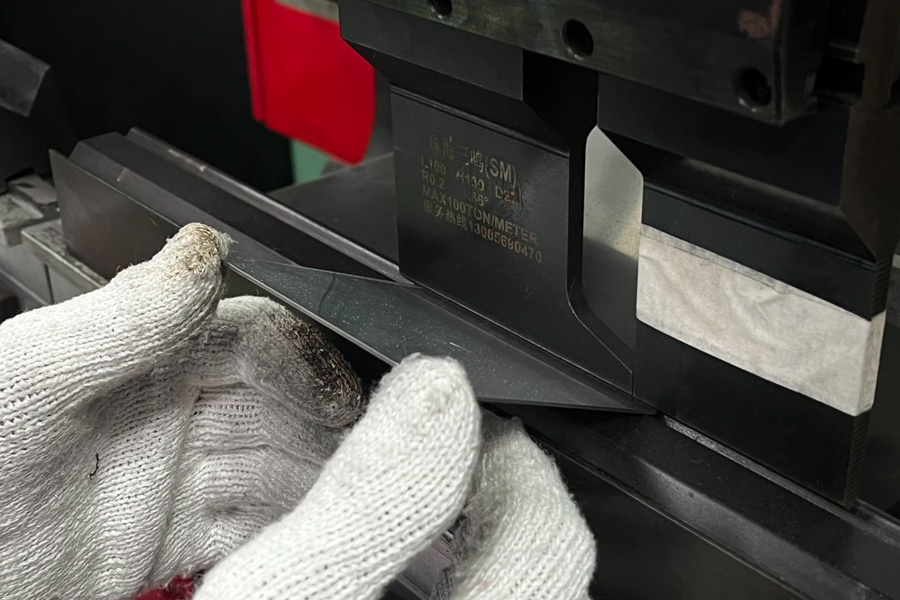
First, accurate mold design is the key. The shape, size and surface roughness of the mold need to be customized according to the material, thickness and bending requirements of the metal sheet. For example, for thinner stainless steel sheets, the edge of the mold should be sharper and the surface should be smoother to reduce scratching and squeezing of the sheet during the bending process, thereby avoiding wrinkles or cracks and ensuring the accuracy of the bending angle. At the same time, the gap of the mold should be strictly controlled. If the gap is too large, the sheet may deform unevenly at the bend. If the gap is too small, it will increase friction, affect the bending effect and even damage the sheet and the mold.
Material pretreatment should not be ignored. Before bending, the metal sheet should be stress relieved. Metal sheets may accumulate internal stress during rolling, transportation or storage, which can easily cause deformation when bent. Through appropriate heat treatment or mechanical stretching, internal stress can be effectively eliminated, making the sheet more stable when bent. In addition, it is also important to ensure that the surface of the sheet is clean and flat. Any impurities, oil stains or unevenness may interfere with the bending process and affect the accuracy.
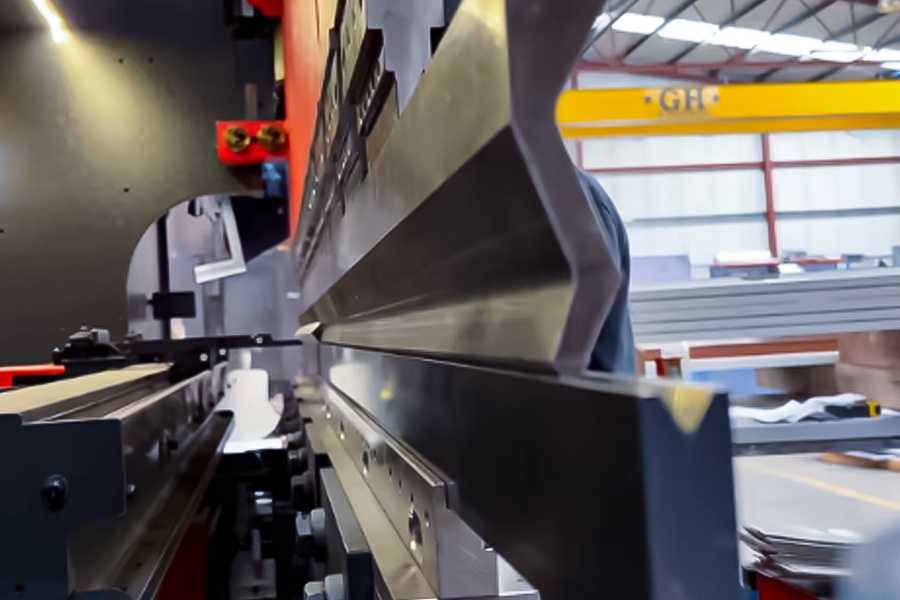
It is also important to choose the right bending equipment. Advanced CNC bending machines have high-precision positioning systems and pressure control systems. The positioning system can accurately control the bending position of the sheet, and the error can be controlled within a very small range. The pressure control system can automatically adjust the bending pressure according to the material and thickness of the sheet to avoid bending accuracy problems caused by excessive or insufficient pressure. Some high-end equipment is also equipped with a real-time monitoring system that can monitor the deformation of the sheet during the bending process and adjust the parameters in time to ensure the stability of the bending accuracy.

The skills and experience of the operator also have a significant impact on the bending accuracy. Skilled operators can reasonably set equipment parameters, such as bending speed and angle, according to the characteristics and bending requirements of the thin plate. During the bending process, they can keenly observe the deformation of the thin plate, and promptly detect and deal with abnormalities. For example, when a thin plate is found to have a slight offset, measures can be taken quickly to correct it to avoid error accumulation. At the same time, operators have a deep understanding of the bending characteristics of thin plates of different materials and thicknesses, and can flexibly adjust the operation methods according to actual conditions.
In the bending process, the use of appropriate auxiliary tools and processes can also improve accuracy. For example, the use of positioning fixtures can ensure that the thin plate is fixed in position during the bending process and will not move. For some complex shapes of bending, a step-by-step bending method can be used, first pre-bending, and then gradually adjusting the angle, so that the bending accuracy can be better controlled. In addition, adding appropriate lubricants at the bend can reduce the friction between the thin plate and the mold, making the bending process smoother and helping to improve accuracy.
Finally, strict quality inspection is an important part of ensuring bending accuracy. Use high-precision measuring tools, such as three-coordinate measuring machines, to conduct comprehensive inspections on the bent sheets, including bending angles, dimensional accuracy, surface flatness, etc. Once the accuracy is found to be substandard, analyze the cause in time and make adjustments or rework. By analyzing the test data, you can also summarize experience and further optimize the bending process and parameters.

Improving the bending accuracy of metal sheets requires comprehensive consideration and corresponding measures from multiple aspects such as mold design, material pretreatment, equipment selection, personnel operation, use of auxiliary tools, and quality inspection. Only in this way can high-precision bending be achieved in the process of metal sheet processing, meet the demand of modern manufacturing for high-quality parts, and promote technological progress and development in related industries.
Key Words
Related Information

Quality-oriented-value symbiosis

Address: No.8, Chuangye East Road, Xiaolin District, Liangang Industrial Zone, Jinwan District, Zhuhai City, Guangdong Province
Links: