


News Center
Quality-oriented-value symbiosis
Metal sheet edge processing: the art of fine processing details
Release time:
2024-12-11
In the field of metal processing, metal sheet edge processing should not be underestimated. It covers multiple processes such as deburring, chamfering, and curling, which are related to material characteristics, involving safety, beauty and functional requirements. From traditional to modern technology, it plays a key role in many industries and promotes the optimization and upgrading of metal products.
In the vast field of metal processing, the edge processing of metal sheets may seem small, but it is like the art of fine processing, which has a vital impact on the quality, aesthetics and safety of the final product.
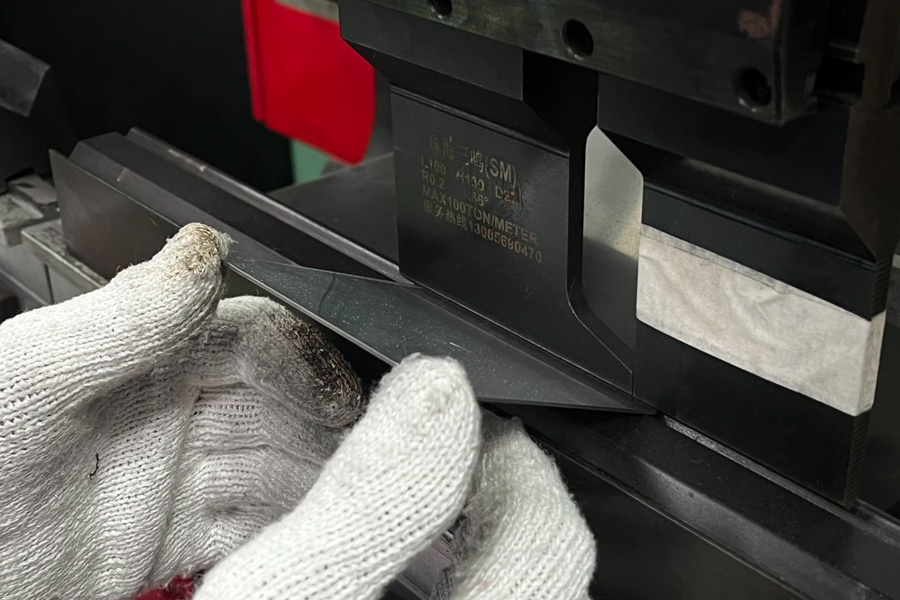
Metal sheets are widely used in many industries, such as automobile manufacturing, electronic equipment production and architectural decoration. And its edge processing is often an easily overlooked but not negligible link in the entire processing process. First of all, from a safety perspective, the edges and corners of metal sheets that have not been properly processed may be very sharp, like hidden sharp blades, which may easily scratch the operator and may also pose a potential threat to the user during the use of the product. Therefore, the first step in edge processing is usually to remove burrs. This process can be achieved by mechanical grinding, chemical corrosion or electrochemical polishing. Mechanical grinding is more common, using tools such as sandpaper and grinding wheels to gradually smooth the burrs on the edges and corners of the sheet, making the edges and corners relatively smooth.

In addition to safety, aesthetics is also an important goal of edge processing. In some high-end electronic products or luxury car interiors, the edge processing of metal sheets directly affects the overall texture of the product. A common aesthetic treatment method is chamfering. Through a specific tool or mold, a bevel is formed at the edge of the thin plate. The size and angle of the chamfer can be determined according to the design requirements. A smaller chamfer can make the edge look more delicate, while a larger chamfer may give the product a tough style. For example, on some fashionable metal frames of smart phones, the tiny chamfering makes the phone comfortable to hold while also presenting a delicate gloss and line beauty.
In some application scenarios with high requirements for sealing and waterproofness, such as precision instrument housings or metal parts of bathroom equipment, curling has become a key process for edge processing. Curling is to curl the edge of the thin plate inward or outward by a certain arc. Inward curling can effectively prevent impurities such as moisture and dust from entering the interior of the product, and also avoid scratches on internal parts by the corners. Outward curling may be more used to enhance the structural strength and appearance of the product. This process requires precise molds and appropriate pressure control to ensure the uniformity and consistency of the curling.
With the continuous advancement of science and technology, some new edge processing technologies have also emerged. For example, laser processing technology uses a high-energy-density laser beam to melt and reshape the edges and corners of metal sheets. This method can achieve extremely high precision and complex shape processing, and is used in the manufacture of some aerospace parts, because these parts have extremely strict requirements on the edge quality of metal sheets.

The edge processing of metal sheets is also closely related to the characteristics of the material. Metal sheets of different materials, such as stainless steel, aluminum alloy, copper alloy, etc., have different properties such as hardness and ductility, which requires the selection of appropriate process parameters when processing edges and corners. For stainless steel sheets with higher hardness, it may be necessary to use higher-power grinding equipment or more high-temperature-resistant laser processing equipment; while for aluminum alloy sheets with better ductility, more attention should be paid to controlling the deformation during the process of curling and other processing.
The edge processing of metal sheets is a detailed art that combines safety considerations, aesthetic pursuits and functional needs. From traditional grinding and chamfering to modern advanced technologies such as laser processing, each method plays a unique role in different industries and products. In the future, with the continuous development of materials science and manufacturing technology, metal sheet edge processing technology will continue to innovate, contributing more to the creation of more exquisite, durable and safe metal products, allowing metal sheets to shine more brightly in various fields.
Key Words
Related Information
Quality-oriented-value symbiosis

Address: No.8, Chuangye East Road, Xiaolin District, Liangang Industrial Zone, Jinwan District, Zhuhai City, Guangdong Province
Links: